Before reciting numbers, children learn to see at a glance that there are “one”, “two” or “three” objects, then to count a collection by matching one number to each object.
The games in this area follow that order: small quantities, counting, written digits, then comparisons (more, less) and first little sums.
The 5 games for learning to count, from the easiest to the hardest
I count
From 3 yearsFree
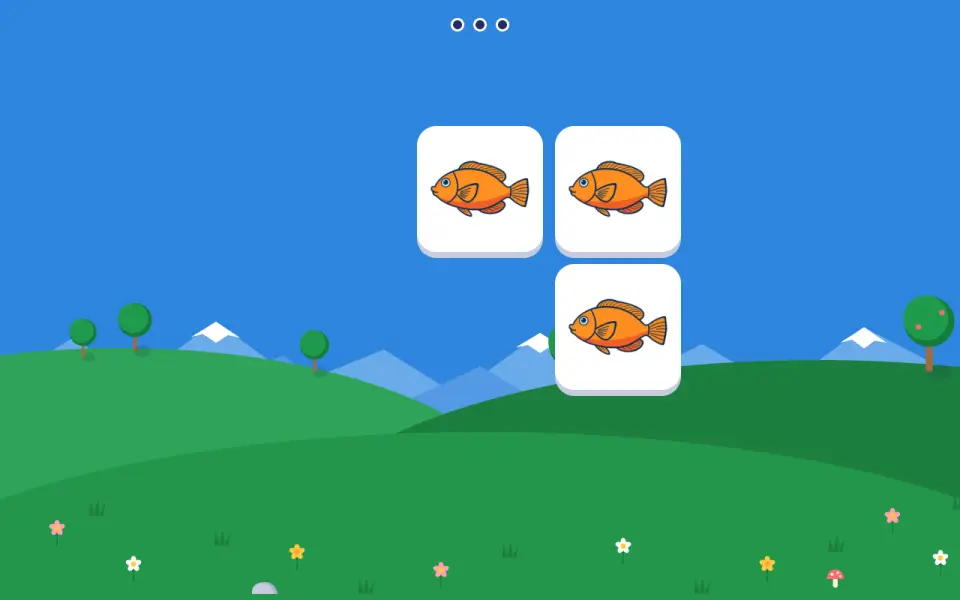
Your child touches each object once, and the bunny says one, two, three… Each object touched gets its number: this is how children learn to really count, one object for one word. An object already counted is not counted again.
Find the number
From 3½ yearsFree
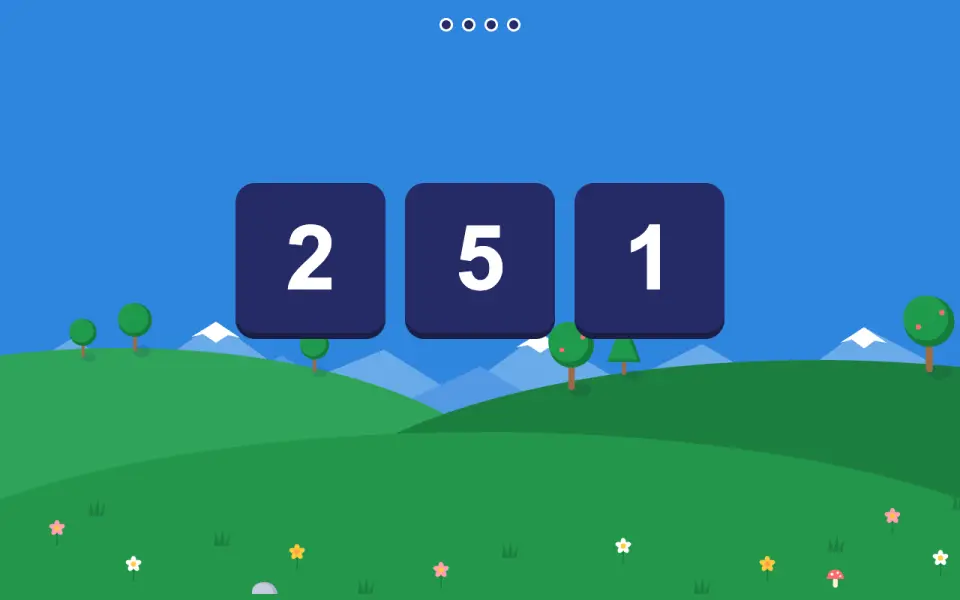
The bunny names a number from 1 to 5 and your child looks for it among three.
How many are there?
From 3½ yearsFree
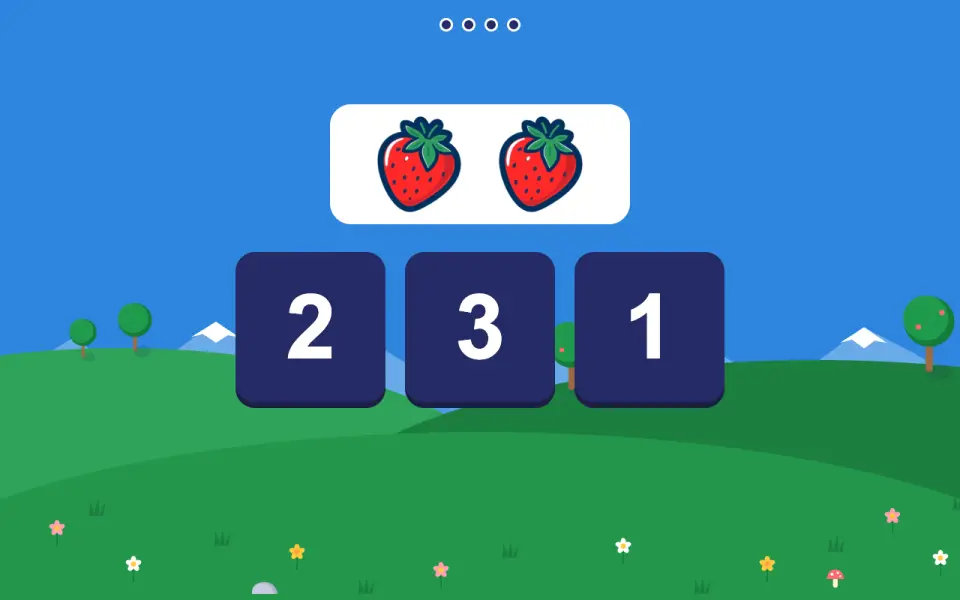
One, two or three pictures appear; your child picks the number that says how many there are. Quantities this small can be seen at a glance, without counting.
More and less
From 3½ yearsPremium
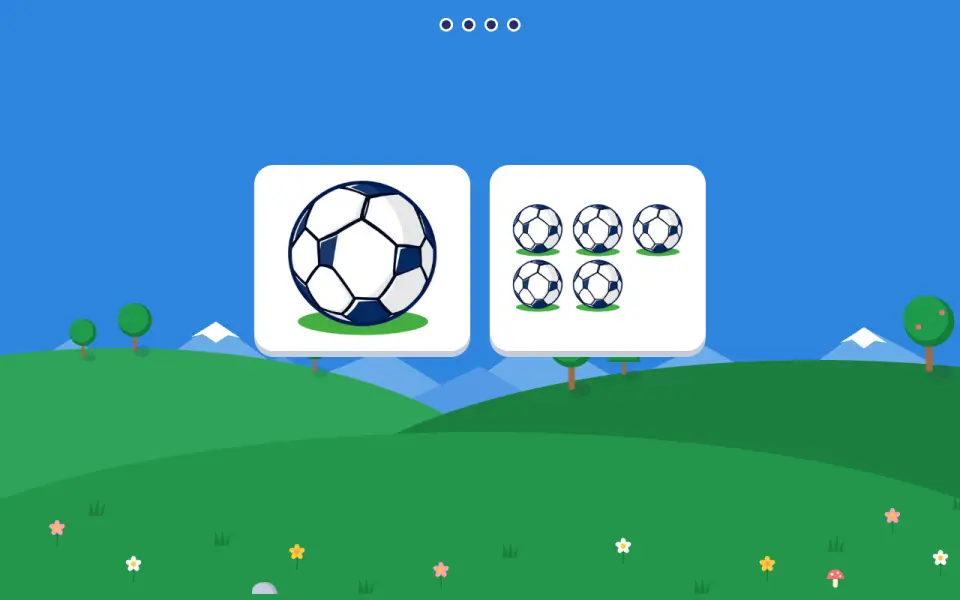
Two piles of pictures; the bunny asks where there are more (or fewer, from level 4). Your child compares without necessarily counting; the gap between the two piles shrinks with the levels.
Little sums
From 5 yearsPremium
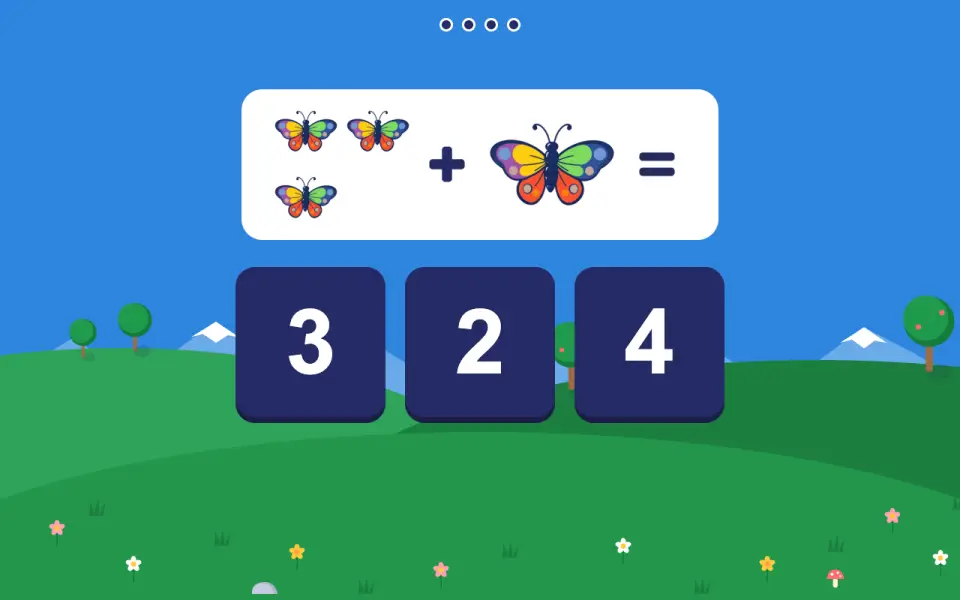
Two small piles of pictures separated by a “plus”: your child picks the number for the total. They can count the pictures to find it. The sums stay small (up to 10 at the last level).
How these games are designed
Every design choice is explained and linked to the studies it relies on, along with what they do not allow us to claim. Find them all on the page Our method and sources.
In the computer’s browser, on a Mac or PC. Nothing to install.